

Researcher Connect is a blog designed for the HKU research community, bringing community members the latest news and trends in research support services. It keeps you well informed of the updated news in areas such as:
How to Publish a Paper

Preparing a manuscript for publication? There are many online guidelines and resources offered by major publishers for publishing papers. Some of them are listed as follows.
| Subjects | Publishers |
| Multidisciplinary |
• Elsevier: Publishing with Elsevier: step by step • Springer: How to Publish? Step by Step • Springer Nature: How to write your paper • Taylor & Francis: Author Services Supporting Taylor & Francis Authors How to Get Published (Youtube video) • Wiley: Journal Authors • Oxford University Press: Welcome to our Author Resource Centre |
| Business and management subject |
• Emerald: Author How-To Guides |
| Education, business, and management |
• SAGE: How to Get Published |
| Chemistry |
• Royal Society of Chemistry: Author & reviewer hub |
| Electronic and electrical engineering |
• IEEE: Publish with IEEE Journals, Conferences, Magazines, Books |
| Medicine |
• BMJ: Resources for authors How to get your research published: The BMJ's tips (Youtube video) |
| Public health & healthcare |
• MDPI: Information for Authors |
Selecting an appropriate journal ensures your work reaches the right audience, undergoes rigorous peer review, avoids desk rejection due to scope mismatch, is discoverable through popular indexing and abstracting databases, and maximises reach and impact. Here are some criteria to help you select the right journal.
 Aims & Scope
 The fastest route to desk rejection is a mismatch between your manuscript and the journal’s aims and scope.
You can:
Read the journal’s aims & scope page carefully.
Skim recent issues to find out topical focus, methods, and audiences.
Check your reference list to get an idea of which journals are more relevant to your manuscript.
 Editorial Policies
 Make sure the journal has clear editorial policies (research ethics, peer review, open data/code, reproducibility) to enhance the reliability of scientific information.
What to check:
Journal(s) homepage for editorial polices or author guidelines.
Peer review policy (whether the journal provides peer review to the articles).
Research integrity and ethics statements, including plagiarism checks and policies on duplicate publication.
Data/code sharing expectations and reproducibility guidance.
Tool:
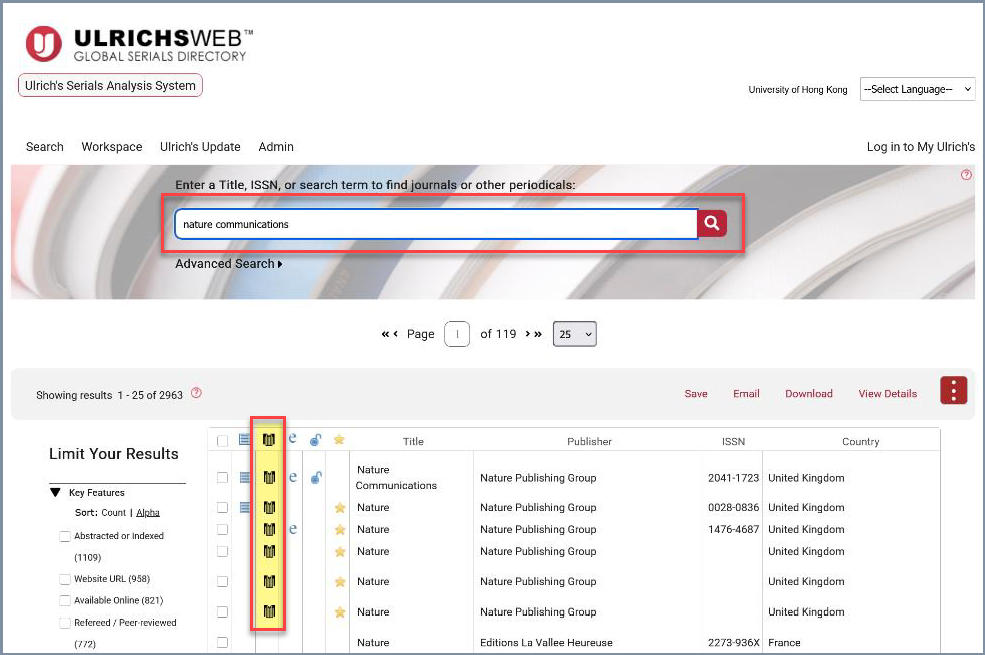
Ulrich’s Periodicals Directory
Enter a Title, ISSN, or search term to find journals and check whether the journal is refereed (Peer-reviewed).
 Abstracting and Indexing
 Journals indexed by major databases are more likely to reach a broader target audience.
Some major indexes:
Web of Science Core Collection
- Science Citation Index Expanded (SCIE)
- Social Sciences Citation Index (SSCI)
- Arts & Humanities Citation Index (AHCI)
- Emerging Sources Citation Index (ESCI)
Includes only journals meeting Clarivate’s selection criteria, e.g., peer review and with ethics statements.
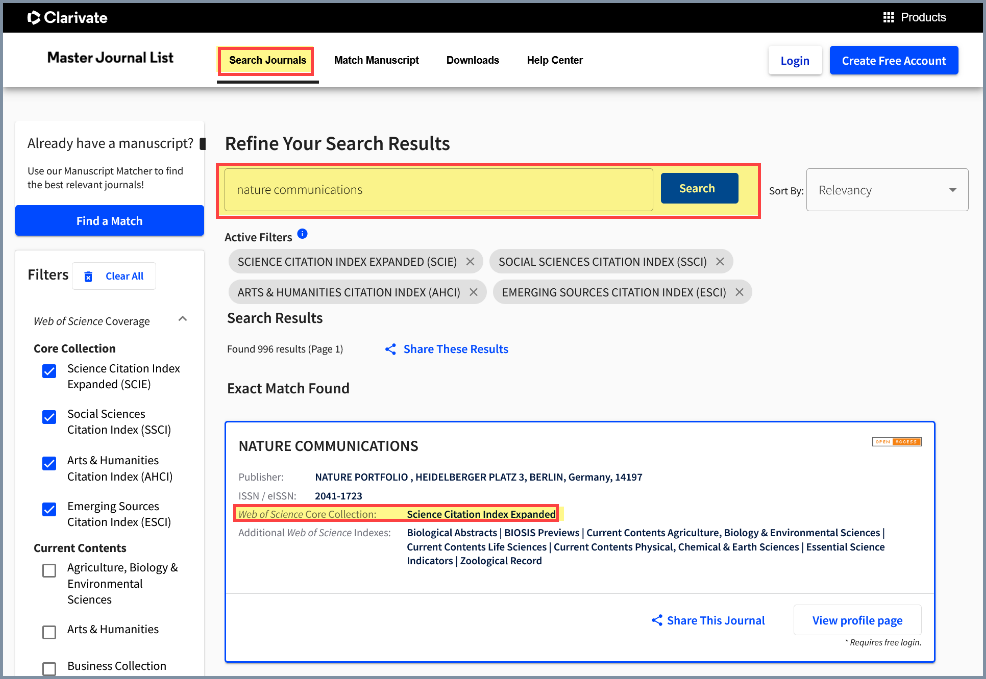
Tool: Master Journal List (Free, personal account required to see the profiles)
(Search journals indexed in the Web of Science by title or ISSN)
Scopus
Reviewed and selected by an independent Content Selection and Advisory Board (CSAB), an international group of researchers with journal editor experience. Journals need to meet the selection criteria to be considered for review.
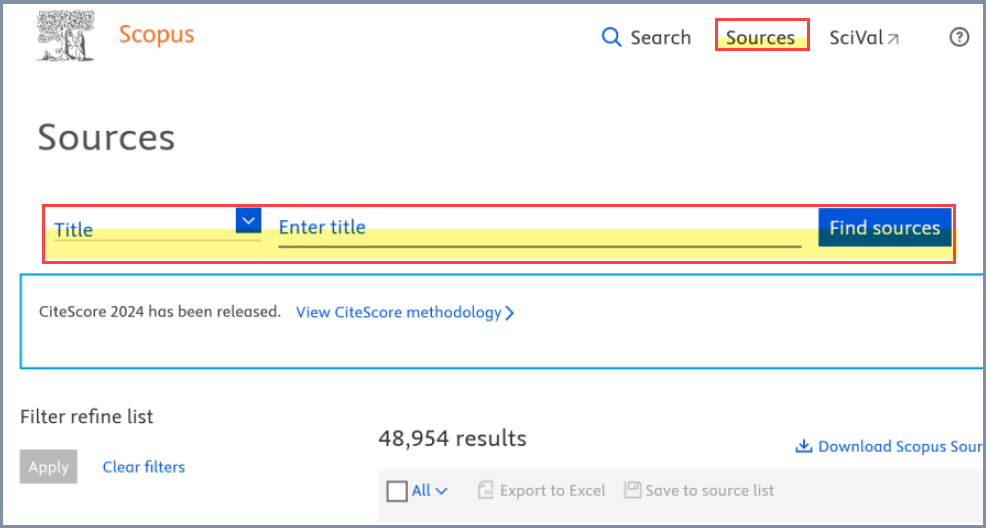
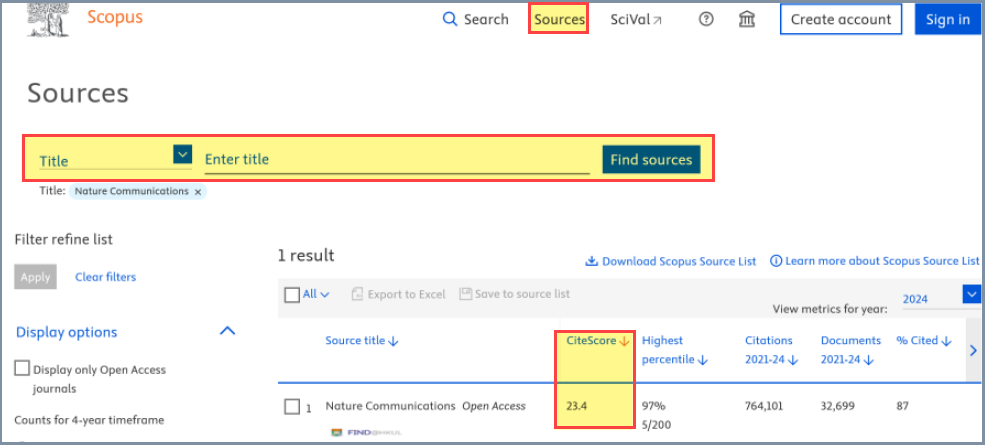
Tool: Scopus
Click “Source” at the top to search by Title or ISSN to check the indexing of the journals.
 Journal Metrics
 Journal metrics can give you an idea of a journal’s citation impact. Visit our guide to know more about journal level metrics.
Common metrics:
Journal Impact Factor (JIF)
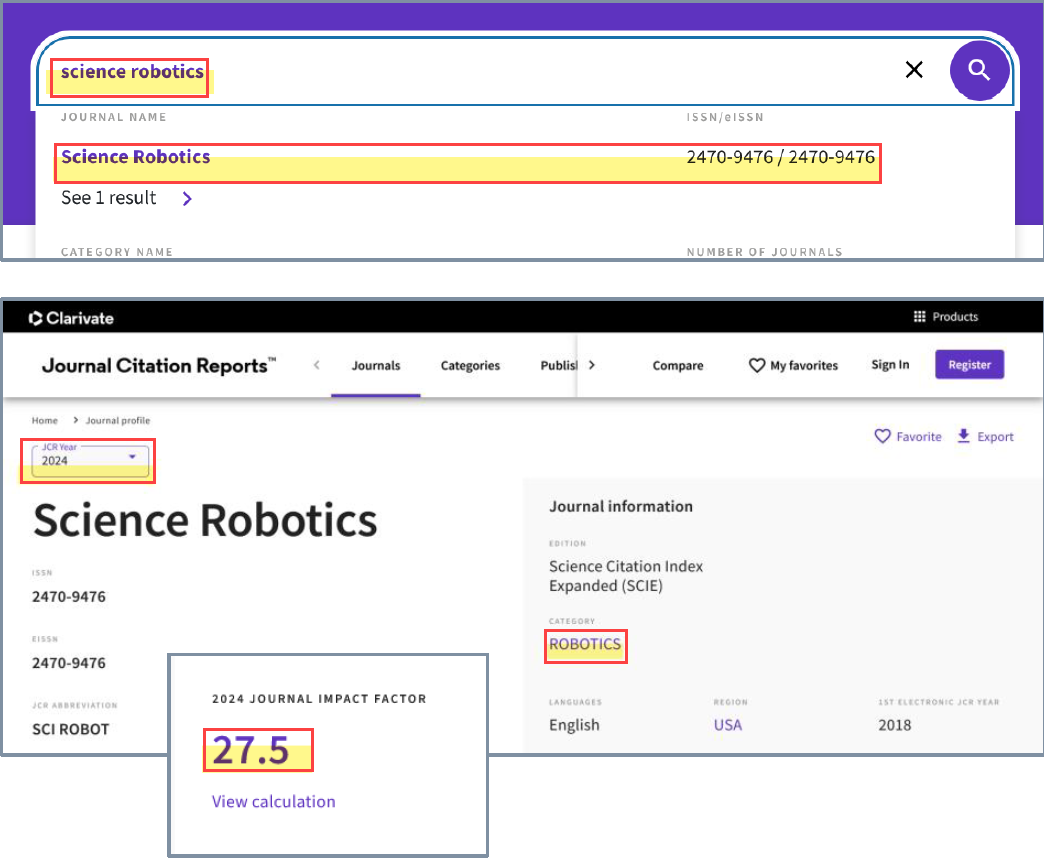
Tool: Journal citation reports
Enter journal title or ISSN, click on the drop-down menu for the journal profile, which displays the Journal Impact Factor of the designated year.
CiteScore
Tool: Scopus (CiteScore)
Click “Source” at the top to search by Title or ISSN and check CiteScore in Scopus.
 Open Access
 Open Access (OA) means making research publications freely available so anyone can benefit from reading and using research. Visit our guide to know more about Open Access.
What to check:
Open access policy (open access charges, copyright/creative commons licenses, self-archiving policy).
Institutional or funder OA requirements.
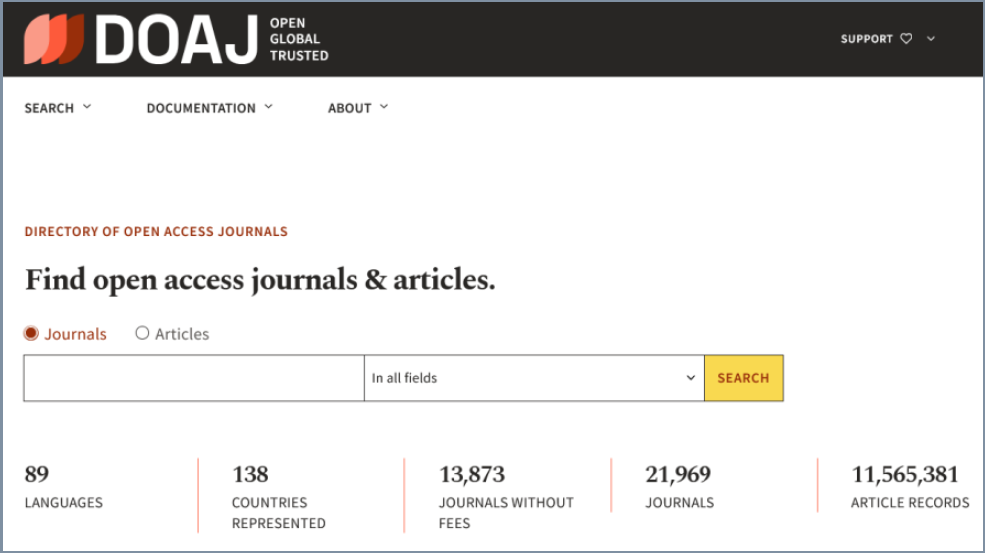
Tool: Directory of Open Access Journals (DOAJ)
A unique and extensive index of diverse open-access journals from around the world, used to identify and verify trusted open access journals that meet standards for transparency and best practice.
 Predatory Journals
 Deceptive journals that often falsely claim to offer peer review and publish all articles, regardless of research rigor, in exchange for a fee. Visit our guide to know more about avoiding predatory journals.
Tool: Think. Check. Submit (A checklist to help you discover what you need to know when assessing whether a publisher is suitable for your research)
 Journal Explorer by HKU Libraries
 Created by HKU Libraries, the journal discovery tool helps researchers find suitable journals for their manuscripts with multiple key indicators, including Journal Impact Factors (JIF), JIF quartiles, open access rates, and relevant QS subjects.
Click to use the Tool (Log-in required. Current HKU staff/students only.)
 Journal Recommenders
 Here are some external/publishers’ platforms that can help you when selecting a journal to publish your research:
1. Authorship
AI tools in general do not qualify as authors in academic writing. It is the authors’ responsibility to ensure the accuracy, originality, and integrity of their work, even when using AI tools in the research or writing process.
The Committee on Publication Ethics (COPE) states:
“AI tools such as ChatGPT cannot be listed as an author of a paper, as they do not meet the requirements for authorship: they cannot take responsibility for the submitted work, nor can they manage conflicts of interest, or agree to publication forms.” (COPE position statement, 2023 )
American Chemical Society (ACS):
“AI tools should not be included in the authorship list. Instead, AI tools should be acknowledged and mentioned transparently.” (Source: ACS Publications)
Oxford University Press (OUP):
“AI does not qualify as an author and should not be used to undertake primary authorial responsibilities.” (Source: OUP Author use of Artificial Intelligence)
2. Use
Different publishers may have different policies on the use of AI tools in academic writing.
Summarising policies by major publishers, typically, AI tools (for example, LLMs, Large Language Models) can be used by authors to assist with specific elements of manuscript preparation, such as improving clarity or grammar, but their use must be appropriately disclosed according to individual publisher policies. Below are some publisher statements or policies on the use of GenAI in scholarly publishing.
| Publisher | Policies and Statements |
| ACM Policy on Authorship | "The use of generative AI tools and technologies to create content is permitted but must be fully disclosed in the Work." |
| Cambridge University Press - AI Contributions to Research Content | "AI use must be declared and clearly explained in publications such as research papers, just as we expect scholars to do with other software, tools and methodologies." |
| Elsevier Generative AI policies for journals |
In scientific writing, “Authors should disclose in their manuscript the use of AI and AI-assisted technologies and a statement will appear in the published work.” In figures, images and artwork, "Elsevier does not permit the use of Generative AI or AI-assisted tools to create or alter images in submitted manuscripts. This may include enhancing, obscuring, moving, removing, or introducing a specific feature within an image or figure. The only exception is if the use of AI or AI-assisted tools is part of the research design or research methods." |
| Emerald Publishing’s Stance on AI Tools and Authorship | "Any use of AI tools within the development of an Emerald publication must be flagged by the author(s) within the paper, chapter or case study." |
| IEEE Submission Policies | “The use of content generated by artificial intelligence (AI) in a paper (including but not limited to text, figures, images, and code) shall be disclosed in the acknowledgments section of any paper submitted to an IEEE publication.” |
| Springer Nature - Artificial Intelligence (AI) |
“Use of an LLM should be properly documented in the Methods section (and if a Methods section is not available, in a suitable alternative part) of the manuscript.” "While legal issues relating to AI-generated images and videos remain broadly unresolved, Springer Nature journals are unable to permit its use for publication. " |
| PLOS - Ethical Publishing Practice | "Contributions by artificial intelligence (AI) tools and technologies to a study or to an article’s contents must be clearly reported in a dedicated section of the Methods, or in the Acknowledgements section for article types lacking a Methods section." |
| Sage - Artificial Intelligence Policy | "The use of AI tools that can produce content such as generating references, text, images or any other form of content must be disclosed when used by authors or reviewers. Authors should cite original sources, rather than Generative AI tools as primary sources within the references. If your submission was primarily or partially generated using AI, this must be disclosed upon submission so the Editorial team can evaluate the content generated. " |
| Taylor & Francis - AI Policy |
"Authors must clearly acknowledge within the article or book any use of Generative AI tools through a statement which includes: the full name of the tool used (with version number), how it was used, and the reason for use. Note that some journals may not allow use of Generative AI tools beyond language improvement, therefore authors are advised to consult with the editor of the journal prior to submission." |
| Wiley - Best Practice Guidelines on Research Integrity and Publishing Ethics |
"Authors may wish to use artificial intelligence tools or technologies (“AI Technology”) when preparing a manuscript for submission to a Wiley journal. Wiley welcomes the thoughtful use of AI tools. Authors should maintain documentation of all AI Technology used, including its purpose, whether it impacted key arguments or conclusions, and how they personally reviewed and verified AI-generated content. Authors must also disclose use of AI Technologies upon submission to a Wiley journal." |
Disclaimer:
The information provided is accurate and current only at the time of data collection. It may not reflect subsequent changes or developments. You are advised to verify publishers’ policies from their websites.
